
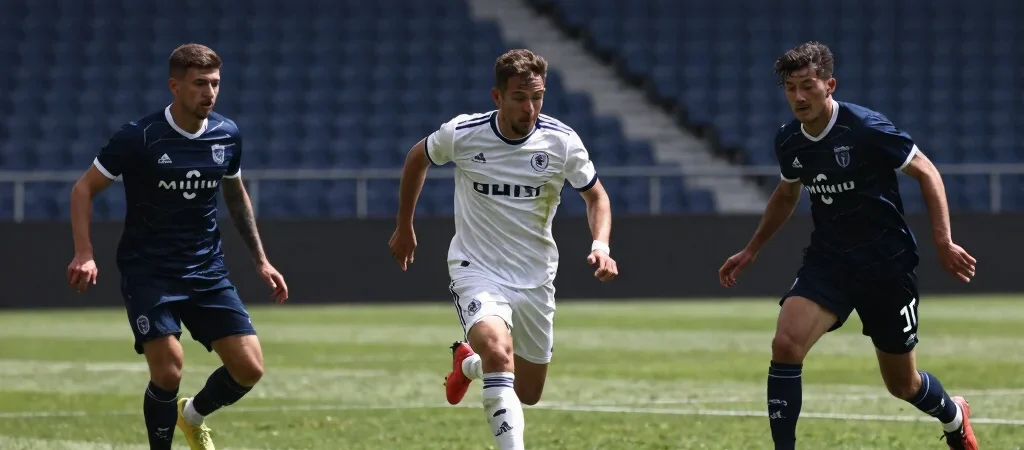
A striker can have a quiet scoreline and still give the team useful options. They might occupy two defenders, bring a teammate into the attack with a simple pass, or press at the moment that sends the opponent toward the sideline. Goals matter, but they are only one part of the job.
Watch the Runs Without the Ball
Notice whether the striker stays between the center backs or moves into a channel beside them. A run toward the near post can open a route for a teammate arriving farther back, while a move away from goal may create room for a winger to attack inside. The run is useful when it changes a defender’s position, even if the pass never comes.
Timing is part of that movement. If the forward starts too early, the defense has time to track them; too late, and the passer may already have lost the opening. When an attack breaks down, replay the run as well as the pass to see whether the opportunity was there.
Check the Link-Up Work
Some forwards are asked to receive the ball with a defender close behind and set it back to an arriving midfielder. That pass may look simple, but it can help the team move forward while keeping possession. If the striker repeatedly has no nearby support, the problem may be the team’s spacing rather than the forward’s touch.
Context matters when judging chances, too. A shot under pressure from a narrow angle is a different opportunity from a clean finish near the center of goal. Rather than treating every attempt alike, consider how much time, space, and support the striker had.
Include the Defensive Shift
When the team loses the ball, watch whether the striker closes down the nearest defender or blocks an easy pass into midfield. That first movement can guide the rest of the team’s press, or buy teammates a moment to recover their positions. A fair assessment asks what the role demanded, what options the team supplied, and how the player responded.