
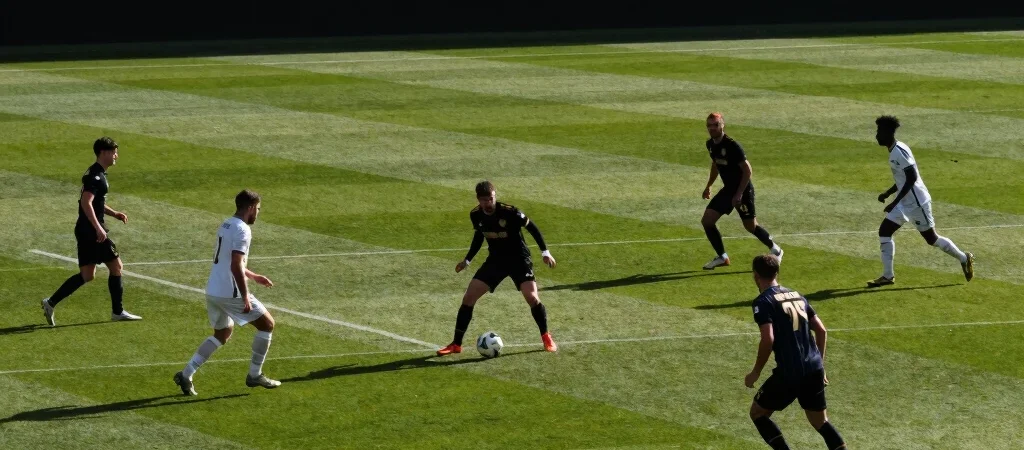
A goal can look inevitable by the time the ball crosses the line. Rewind a few seconds, though, and the important moment may be a defender stepping out, a midfielder turning away from pressure, or a runner pulling a marker out of position. Following that chain gives you a clearer account of what happened than judging the finish alone.
Rewind Before the Final Pass
Start with the first pass that made the defense adjust. A switch from one side of the field to the other can force the opposing block to travel, leaving a gap between its midfield and back line. A quick pass into that gap may matter more than the assist that follows.
Look, too, at who created room without touching the ball. A forward running toward the near post can draw a center back with them, opening space for a teammate arriving behind. These movements are easy to miss when the broadcast stays tight on the ball.
Watch the Defense Adjust
The shape of the defending team can tell you why an opening appeared. If its wide defender steps forward to press, check whether a teammate covers the space behind; if nobody does, that channel may be available for a pass or a run. One player’s decision can change the choices available to everyone around them.
Not every promising attack comes from a defensive mistake. Sometimes the attacking side moves the ball quickly enough to make an organized defense arrive a step late. The useful question is not simply who failed, but which team made the next decision harder for its opponent.
Follow the Whole Sequence
On a replay, trace the play from the first change in pressure to the shot. Note the pass that moved the defense, the run that occupied a marker, and the choice that created the finish. The score records the outcome; the buildup shows how the teams shaped it.